Politics & Government
Dold: Tax Hikes Not Off the Table
Congressman says he's open-minded about debt reduction.


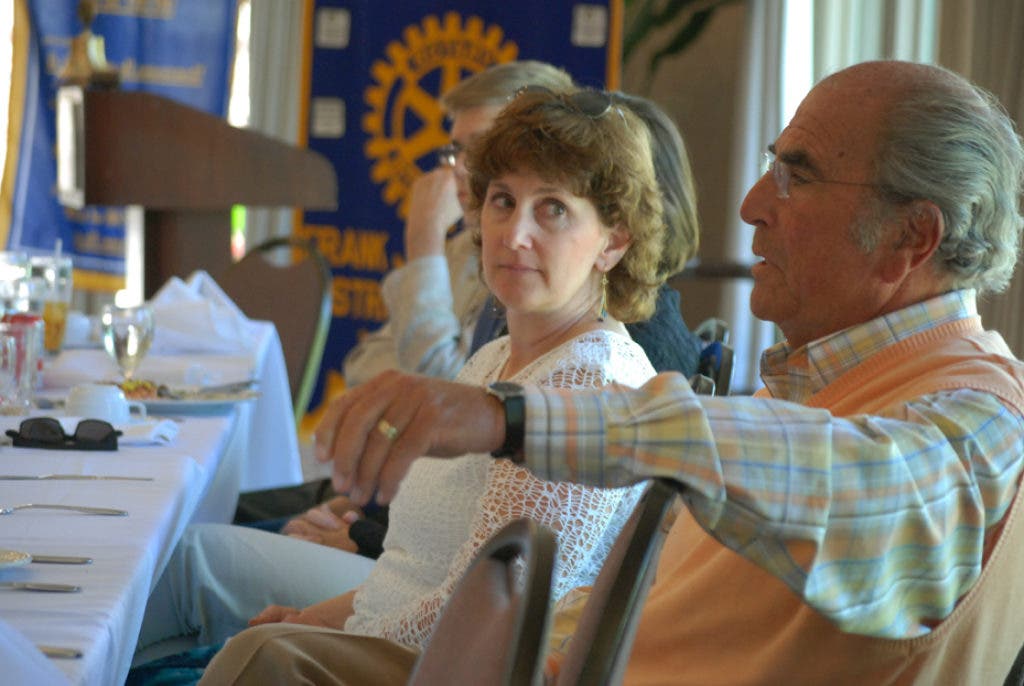
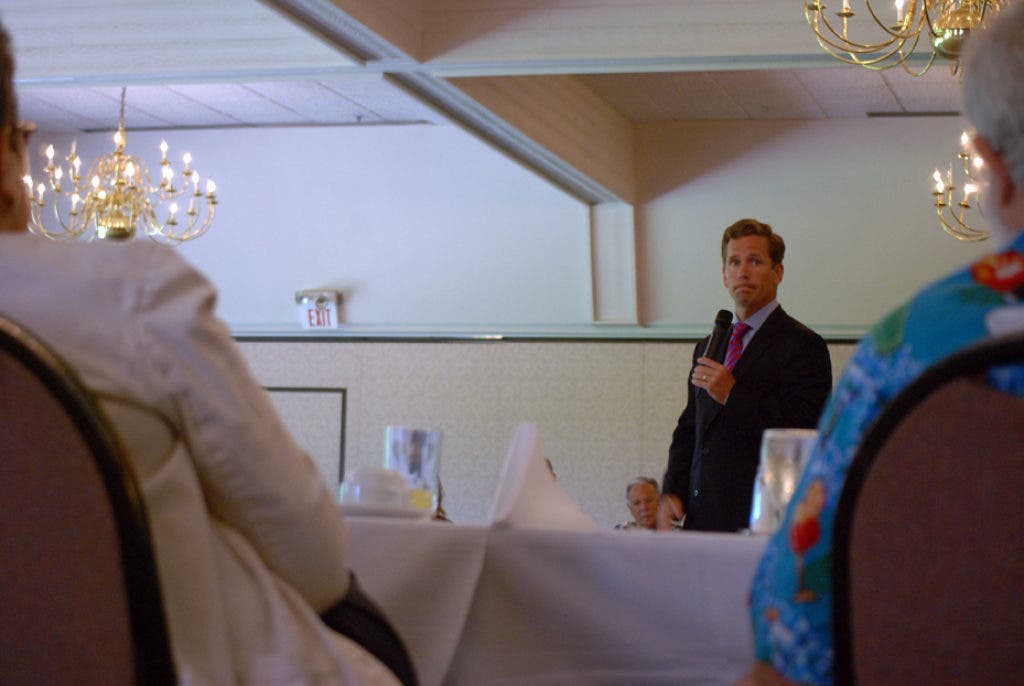
indicated he would not automatically reject any deficit reduction program that includes a tax increase after giving a legislative update to more than 45 people Monday at meeting at the Highland Park Country Club.
“I don’t want to put it off the table,” Dold said, adding he preferred not to raise tax rates. “It’s not the right thing to do in the face of this down economy."
Bipartisanship necessary for debt reduction
Find out what's happening in Highland Parkwith free, real-time updates from Patch.
During the meeting, Dold took questions on topics including the country’s financial condition, the burgeoning national debt, job creation and the wars in Iraq and Afghanistan.
The issue of a revenue component to cut the federal deficit was raised by three different attendees. One man asked if a bipartisan solution to cutting an additional $1.5 trillion was possible with the new 12-member super committee charged with the task.
Find out what's happening in Highland Parkwith free, real-time updates from Patch.
“We need seven votes in favor to go back to the House and Senate for an up or down vote,” Dold said. “I am hopeful we can come up with a bipartisan plan to pass and reduce the debt. The only way to get it done is in a bipartisan manner.”
The super committee comprises three House Republicans, three House Democrats, three Senate Republicans and three Senate Democrats. At least one member must side with the other party for success.
“How is that possible with the Grover Norquist pledge?” asked Penny Fields. “I have a problem with pledges. They limit you.”
The pledge by Norquist, the head of Americans for Tax Reform, attempts to get members of Congress and candidates for the office to oppose tax increases.
“I signed it early on as a candidate in the campaign,” Dold said. “I did sign the pledge, but my first pledge is to the people of the 10th District and the nation."
Closing the loopholes
North Shore Sanitary District President and 10th District Democratic Committeeman , who also attended Monday's event, was critical of signing any pledge.
“It makes it much harder to compromise,” he said. Pierce also served as mayor of Highland Park and a member of the Illinois General Assembly.
Attendee Larry Block was skeptical about reducing the deficit without finding more revenue. Dold responded that he wants tax reform that lowers the corporate tax rate and closes ambiguities in the current Internal Revenue Code.
“What we need to be doing is closing the number of loopholes,” Dold said. “The federal government should not be picking the winners. We need to lower the corporate rates so we’re more globally competitive.”
Dold thinks the best way to increase revenue is to create jobs to reduce the unemployment rate. He believes that rate is much higher than the government-published 9.1 percent.
“The number one issue is jobs and the economy,” Dold said. “Among recent college graduates [the unemployment rate] is 25 percent. When you look at the people who are working part-time or have stopped looking it is closer to 17.5 percent. We need to get them working and paying taxes.”
Eliminating uncertainty
Eliminating uncertainty in the business community and among consumers is the best way to foster job growth, according to Dold. He believes an environment of certainty will give employers the confidence to hire more people instead of hiring temporary workers or making existing employees work overtime.
“There are so many regulations businesses owners do not know what to expect,” Dold said. “They don’t understand how much the new health care law will cost."
Dold believes that making regulations clear for the business community, particularly small business, will make it easier for them to hire.
“We have 29 million small businesses in this country,” Dold said. “We need to create an environment where they can afford to hire just one more person.”


